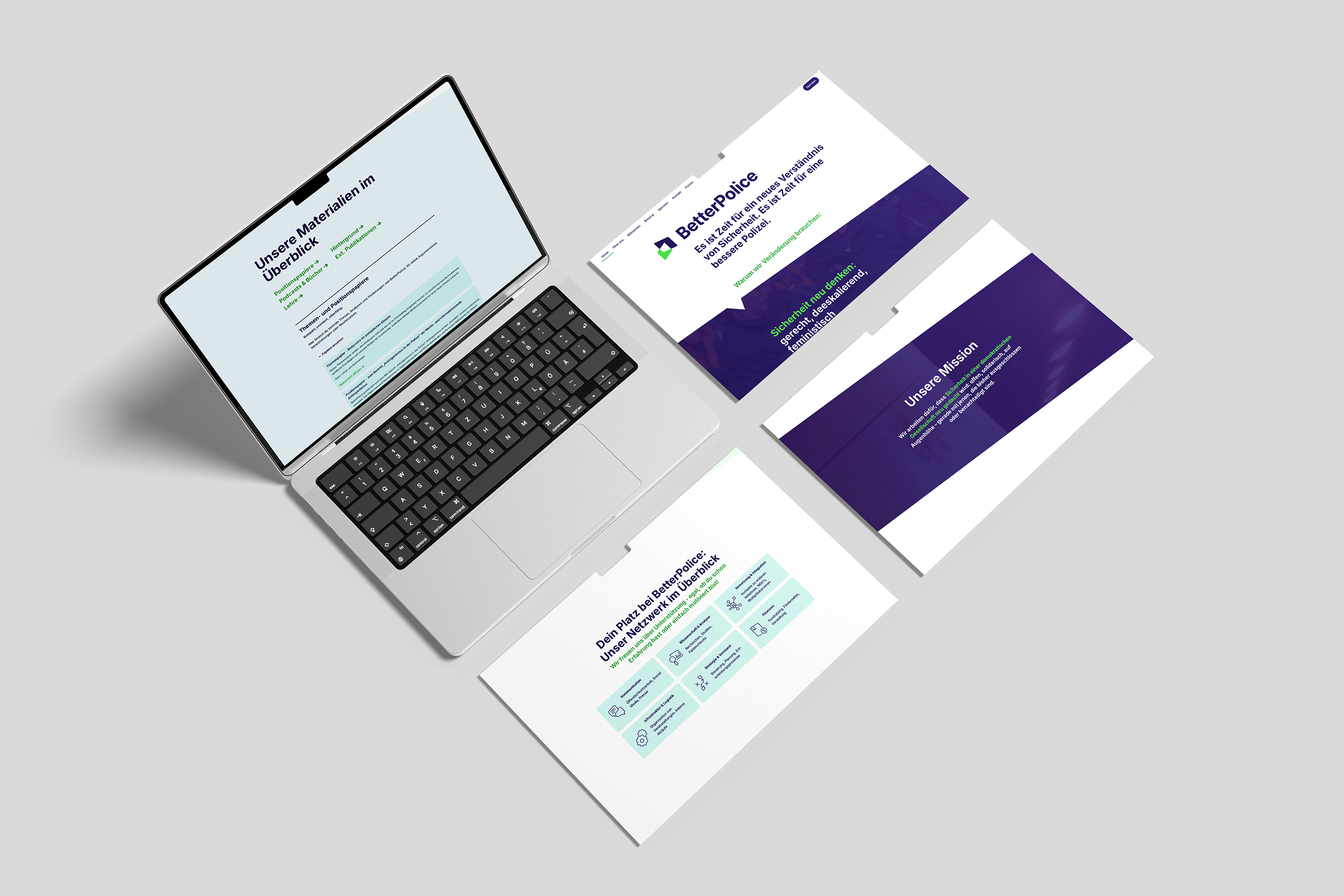
Better Police was doing meaningful work in a highly sensitive space—where credibility is everything—but the public-facing picture didn’t yet match the ambition. The organization needed a clearer strategic north star: where it’s heading, what it stands for, and how to communicate that in a way that makes sense quickly and holds up under scrutiny. Without that clarity, even strong work can look fragmented or reactive, especially on a topic where audiences arrive with strong emotions, skepticism, or lived experiences.
At the same time, the visual identity and digital presence weren’t yet supporting trust-building at first glance. In a context like policing, legitimacy is judged in seconds, and inconsistent messaging or an underdeveloped brand can unintentionally signal “unfinished,” even when the underlying work is rigorous. The core challenge wasn’t “make it prettier.” It was to build alignment inside the team, then translate that shared clarity into a credible identity and a website that can carry the narrative long-term.
Strategy, Copywriting, Website Development
2026
BetterPolice e.V.
We approached the project as a collaborative process, not a one-off delivery. Over an extended period, we worked closely as a team—meeting weekly, iterating continuously, and shaping strategy through real discussion rather than a single briefing document. My role was to facilitate and steer that process: moderating workshops and working sessions, structuring decisions, surfacing trade-offs, and ensuring that what we defined together became coherent, usable, and aligned with the organization’s mission.
From that shared foundation, we built a narrative architecture—messaging pillars, framing, and priorities that let Better Police communicate consistently without oversimplifying a complex topic. We then translated that direction into an actionable communication strategy with a timeline, so “what we stand for” became “what we’ll say, to whom, and when,” with a rhythm that supports sustained trust rather than isolated moments.
In parallel, the corporate design was led and created independently by an external graphic designer. I acted as the strategic interface and continuity point: connecting the designer to our strategic intent, aligning on what the brand needed to express, and making sure the system would translate smoothly into implementation—especially on the website, where strategy either becomes real or quietly breaks.
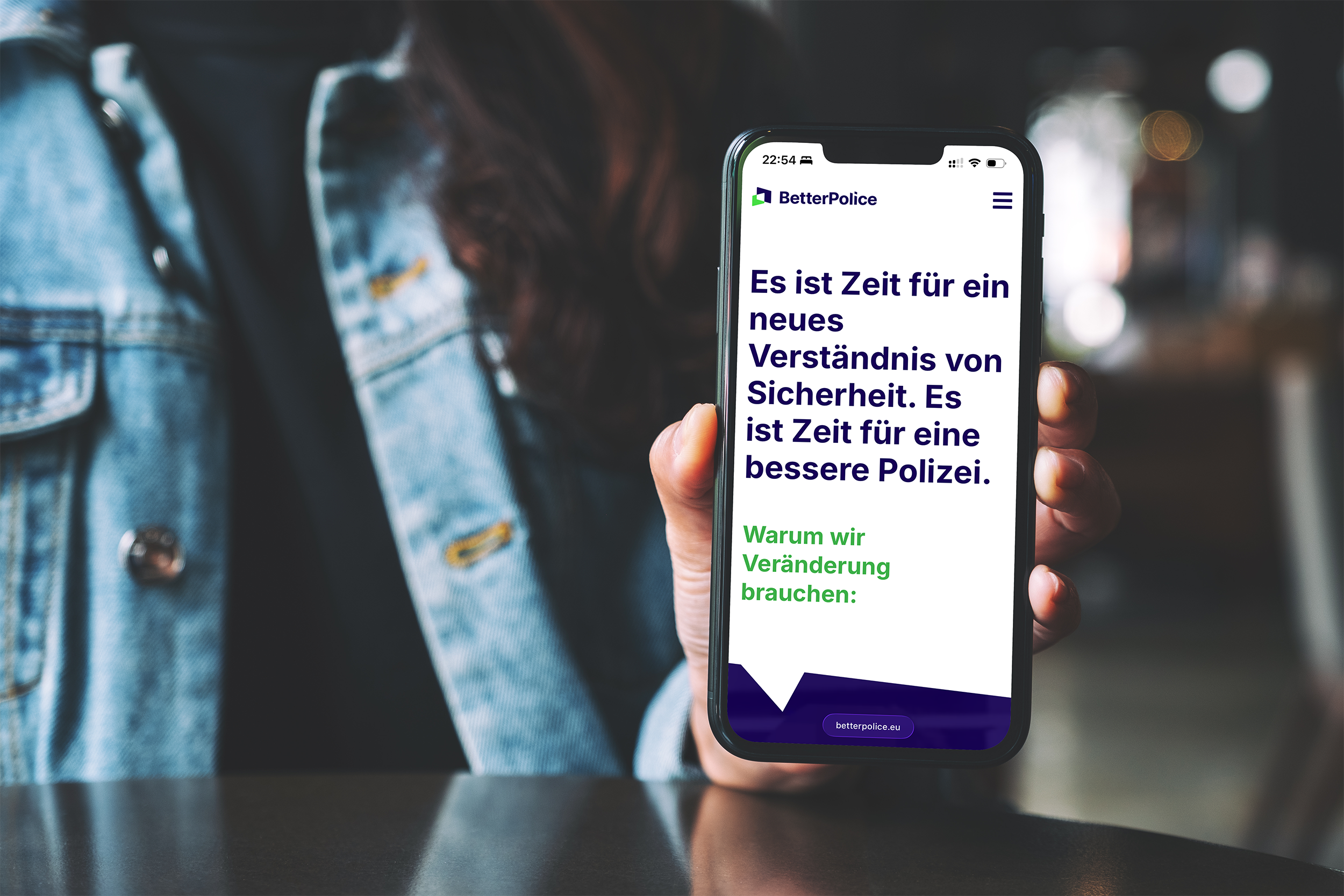
The outcome was an end-to-end chain from alignment to execution. Together, we clarified strategic direction and positioning, and shaped a messaging framework that articulates purpose, priorities, and narrative in a way that is both accessible and robust. We turned that into a structured communication strategy and timeline that supports ongoing outreach and consistent storytelling instead of ad-hoc messaging.
The corporate design system was delivered by the external designer, with my role focused on maintaining strategic alignment and preparing the ground for real-world translation. I then implemented the new identity and content structure in a complete website build in WordPress/Elementor—without templates—bringing the strategy, messaging, and design together into a functional platform. That meant not only building pages, but translating a brand system into layout logic, hierarchy, and reusable components that can evolve with the organization.
In short: we created clarity together, a designer embodied it visually, and I turned the whole system into a website people can actually use.
Better Police now communicates with a consistent voice and a professional presence that matches the importance of the mission. That matters because policing, safety, and democratic accountability are not neutral topics; they are emotionally charged and politically contested, and people often arrive with distrust or fatigue. A coherent strategy and communication system helps the organization stay precise, transparent, and understandable—qualities that are essential when the work involves public institutions and the lived experiences of diverse communities.
Beyond first impressions, the new brand and website create a stable foundation for long-term engagement. The organization can guide people through its purpose and work in a way that is structured and credible, lowering the barrier to understanding and making it easier for supporters, partners, and stakeholders to connect, follow, and contribute over time.
On a personal level, this project also reflects why I invest time beyond my day job into NGO work. I want my skills to contribute to social value, not only commercial value. Strategy, facilitation, and good communication are leverage: they help complex work become accessible, accountable, and easier to trust. In a society where trust is fragile and institutions are under pressure, building clarity and legitimacy isn’t cosmetic—it’s civic infrastructure.